
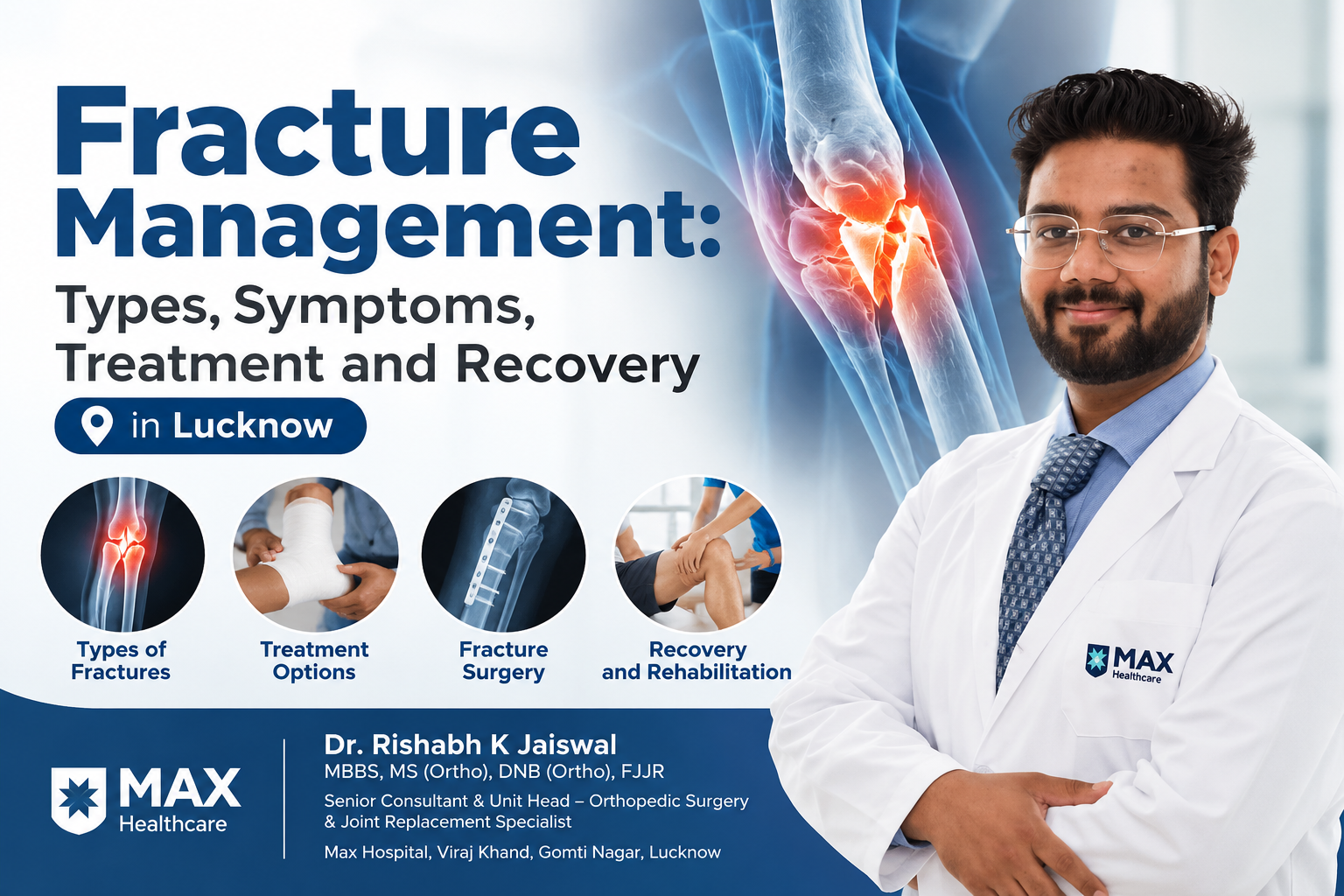
Introduction A fracture is a break or crack in a bone that can occur due to a fall, road traffic accident, sports injury or direct impact. Fractures can affect different parts of the body, including the arms, legs, wrists, ankles, hips and shoulders. Depending on the severity of the injury, a fracture may require a cast, splint, medication, rehabilitation or surgical treatment. Proper fracture management is essential to support bone healing, restore movement and reduce the risk of complications. Early diagnosis and appropriate treatment can help patients return to their daily activities safely. People searching for fracture treatment in Lucknow often want to understand the different types of fractures, available treatment options, the need for surgery and the expected recovery period. In this blog, we explain the causes, symptoms, diagnosis, treatment methods and rehabilitation process involved in fracture management. What Is Fracture Management? Fracture management refers to the medical assessment and treatment of a broken bone. The main objectives are to restore the bone’s alignment when necessary, maintain stability, support healing, manage pain and help the patient regain function. The appropriate treatment depends on several factors, including: Some fractures can heal with immobilisation using a cast or splint, while others require surgical procedures to stabilise the bone. An orthopaedic specialist evaluates these factors before recommending an appropriate treatment plan. What Are the Different Types of Fractures? Fractures are classified according to the pattern of the break, the extent of bone damage and whether the skin is affected. 1. Closed Fracture A closed fracture occurs when the bone breaks without creating an open wound through the skin. Although the skin remains intact, surrounding tissues may still be damaged. 2. Open Fracture An open fracture occurs when a wound communicates with the fracture, sometimes with the bone visible through the skin. This type of injury carries a significant risk of infection and requires emergency medical treatment. Do not attempt to push exposed bone back into the wound. Cover the wound with a clean dressing and seek emergency care. 3. Displaced Fracture A displaced fracture occurs when the broken bone fragments have moved out of their normal alignment. Depending on the injury, treatment may involve repositioning the bone or surgery. 4. Non-Displaced Fracture In a non-displaced fracture, the bone has broken but the fragments remain in relatively normal alignment. Many such fractures can be treated with appropriate immobilisation, depending on their location and stability. 5. Comminuted Fracture A comminuted fracture occurs when a bone breaks into three or more pieces. It can result from high-impact injuries and may require specialised treatment. 6. Stress Fracture A stress fracture is a small crack in a bone caused by repetitive loading or overuse. It commonly affects weight-bearing bones, particularly in people who increase their physical activity suddenly. 7. Greenstick Fracture A greenstick fracture is an incomplete fracture in which the bone bends and cracks rather than breaking completely. It is more common in children because their bones are more flexible. The type of fracture plays an important role in determining the treatment method and expected recovery. What Are the Common Causes of Bone Fractures? Bone fractures can occur because of sudden trauma or repeated stress on the bone. Common causes include: Identifying the cause helps the doctor assess the severity of the injury and determine whether additional investigations are needed. What Are the Symptoms of a Fracture? Fracture symptoms vary depending on the bone involved and the severity of the injury. Common signs include: 1. Pain A fracture often causes pain that worsens when the affected area is moved or placed under pressure. 2. Swelling Swelling may develop around the injured area shortly after the injury. 3. Bruising Blood vessels around the injured bone may be damaged, leading to bruising or discolouration. 4. Deformity The affected limb may look unusually shaped or appear out of alignment, particularly in displaced fractures. 5. Difficulty Moving or Bearing Weight A fracture in the leg, ankle or foot may make walking difficult. An arm fracture may interfere with lifting, gripping or other daily activities. 6. Tenderness The area around the fracture may be painful when touched. Not every fracture causes obvious deformity or severe pain. If a fracture is suspected following an injury, medical evaluation is important even when symptoms appear mild. When Should You Seek Emergency Fracture Treatment? Certain fractures require immediate medical attention to prevent serious complications. Seek emergency care if you notice: While waiting for medical help, keep the injured area as still as possible. Do not attempt to straighten the bone or push it back into place. If a serious injury is suspected, avoid unnecessary movement and follow emergency medical guidance. How Is a Fracture Diagnosed? Accurate diagnosis helps determine the appropriate treatment and reduces the risk of complications. 1. Medical History and Physical Examination The orthopaedic doctor will ask how the injury occurred, where the pain is located and whether the patient has any existing medical conditions. The examination may include checking swelling, tenderness, alignment, skin condition, circulation and nerve function. 2. X-ray An X-ray is commonly the first imaging test used to identify a fracture, assess bone alignment and determine the general pattern of the break. 3. CT Scan A CT scan may be recommended for complex fractures, particularly those involving joints or areas where detailed assessment of bone fragments is necessary. 4. MRI Scan An MRI may be useful when a stress fracture or an associated soft-tissue injury is suspected but is not clearly visible on an X-ray. 5. Additional Investigations Some patients may require blood tests or other investigations depending on the type of injury, planned surgery and general health. Not every patient requires all these tests. The doctor recommends investigations according to the clinical findings. What Are the Different Fracture Treatment Options? Fracture treatment depends on the bone involved, fracture stability, displacement, associated injuries and the patient’s health. 1. Cast or Splint Immobilisation A cast or splint keeps the injured bone stable while it heals. A cast may be recommended
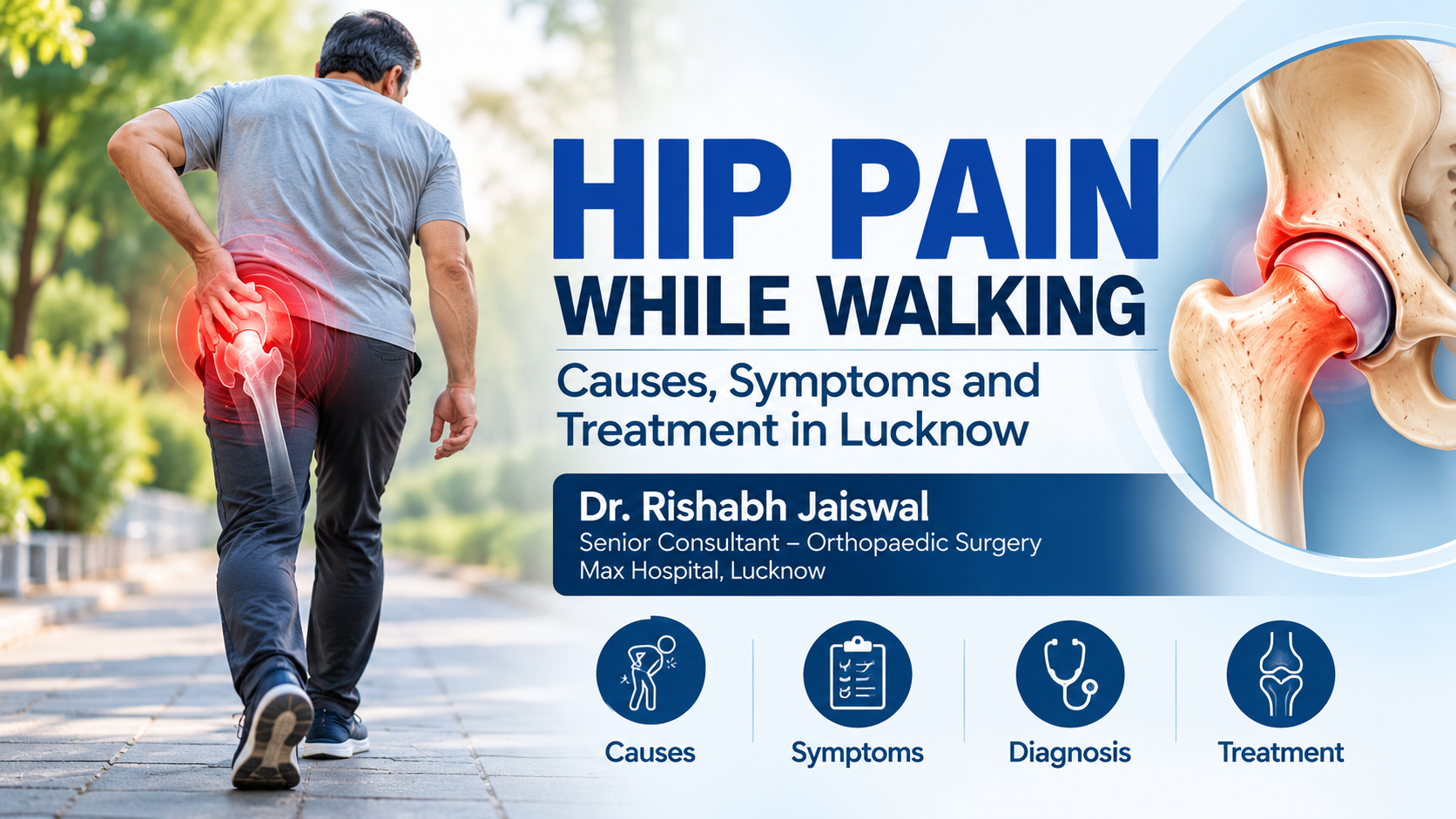
Hip Pain While Walking: Causes, Symptoms, and Treatment in Lucknow
Introduction: That Clicking Sound in Your Knee You stand up from a chair and hear a click from your knee. A few days later, you notice the sound again while climbing stairs. Then walking starts to feel uncomfortable, or the knee feels stiff after sitting for a long time. It is natural to wonder whether the joint is getting damaged. Knee clicking or cracking is common and does not always mean something is wrong. However, when sounds occur alongside pain, swelling, stiffness, locking, or difficulty walking, it is worth getting the knee assessed. The important question is not simply whether the knee makes a sound, but whether that sound comes with other symptoms. Dr. Rishabh Jaiswal, Senior Consultant in Orthopaedic Surgery at Max Hospital, Lucknow, treats a range of bone, joint, sports injury, and joint replacement concerns. Why Do Knees Make Clicking or Cracking Sounds? 1 Painless joint noises Some knee sounds occur during ordinary movement and are not accompanied by pain or swelling. A sound alone is not enough to diagnose arthritis or cartilage damage. 2 Changes related to osteoarthritis Osteoarthritis can affect the cartilage and other structures in the joint. Some people experience creaking or grinding sensations along with pain, stiffness, and reduced movement, especially during activity. 3 Meniscus injury The meniscus is a piece of cartilage that helps cushion the knee. A tear may cause pain, swelling, catching, or locking, particularly after a twisting injury. Not every meniscus tear requires surgery; management depends on the tear, symptoms, age, activity, and examination findings 4 Patellofemoral pain Pain around or behind the kneecap may occur during squatting, stair climbing, running, or prolonged sitting. It can sometimes be accompanied by clicking or grinding sensations. 5 Ligament or other injury A sudden twist, awkward landing, or sports injury may damage knee structures. A pop at the time of injury, rapid swelling, instability, or difficulty bearing weight warrants prompt assessment. When Is Knee Clicking a Warning Sign? Consider arranging an orthopaedic assessment if clicking repeatedly occurs with pain, swelling, stiffness, reduced range of motion, or difficulty walking. A knee that catches or locks, or feels as though it may give way, also deserves evaluation How Is the Cause Diagnosed? A doctor may ask when the sound began, whether there was an injury, which movements trigger it, and whether pain or swelling accompanies it. The physical examination may assess tenderness, range of motion, stability, kneecap movement, and walking. An X-ray may be useful when osteoarthritis, fracture, or another bone-related issue is suspected. MRI may be considered when a meniscus, ligament, or other soft-tissue injury is suspected and the result would affect management. Imaging is selected according to the symptoms and examination; not every clicking knee needs an MRI Treatment Options: What May Help? Treatment depends on the underlying cause. If the sound is painless and there are no other concerning symptoms, treatment may not be needed. If pain or functional difficulty is present, a clinician may recommend activity modification, physiotherapy, muscle strengthening, gradual return to activity, suitable pain relief, or other measures tailored to the diagnosis. For some people with osteoarthritis, low-impact activity, strength exercises, and weight management where appropriate can help manage symptoms. Meniscus and ligament injuries need individual assessment; some can be managed without surgery, while selected injuries may benefit from a procedure. Surgery should not be decided on the basis of a clicking sound alone. The decision depends on the diagnosis, symptom severity, functional limitations, imaging when appropriate, and a discussion of the potential benefits and risks. What Can You Do at Home? Temporarily reduce activities that clearly aggravate pain, but avoid prolonged inactivity unless advised. Return to exercise gradually and choose movements that do not cause significant pain. Do not repeatedly test the knee by forcing deep squats or twisting movements if they trigger symptoms. Use medication only as advised by a qualified clinician, especially if you have other medical conditions or take other medicines. If symptoms persist, worsen, or interfere with walking, arrange a medical evaluation instead of relying on home remedies alone. Why Seek Orthopaedic Advice in Lucknow? Knee noises can have different explanations, and symptoms provide important clues. An orthopaedic evaluation can help distinguish harmless clicking from problems that need treatment. Dr. Rishabh Jaiswal is a Senior Consultant in Orthopaedic Surgery at Max Hospital, Lucknow, with clinical interests in arthroscopy, sports injuries, and joint replacement. If you have knee clicking along with pain, swelling, locking, or difficulty walking, consult a qualified clinician to discuss the appropriate assessment and treatment options. Frequently Asked Questions Q: Are knee clicking sounds always a sign of arthritis?A: No. Painless clicking can occur without a serious problem. Pain, swelling, stiffness, or functional changes need assessment. Q: Should I get an MRI for knee clicking?A: Not always. A clinician decides whether imaging is needed based on your history and examination. Q: Can a meniscus tear cause knee locking?A: Some meniscus tears can cause catching or locking, but other conditions may also produce similar symptoms. An assessment is needed. Q: Can exercise make knee clicking worse?A: Some movements may aggravate symptoms depending on the cause. Modify painful activities and seek guidance on suitable exercises. Q: When should I see an orthopaedic doctor?A: Seek advice if clicking occurs with pain, swelling, locking, instability, or difficulty walking. Urgent care is appropriate after a significant injury or if you cannot bear weight. Conclusion Knee clicking does not automatically mean that the joint is damaged. But when the sound occurs with pain, swelling, stiffness, locking, or difficulty walking, it should not be ignored. Understanding the cause is the first step toward choosing appropriate care Contact Details Dr. Rishabh K Jaiswal | MBBS, MS (Ortho), DNB (Ortho), FJJRSenior Consultant & Unit Head – Orthopedic Surgery & Joint Replacement SpecialistMax Hospital, Viraj Khand, Gomti Nagar, Lucknow, Uttar PradeshPhone: +91 9920624929Educational information only; this article does not replace a medical consultation.
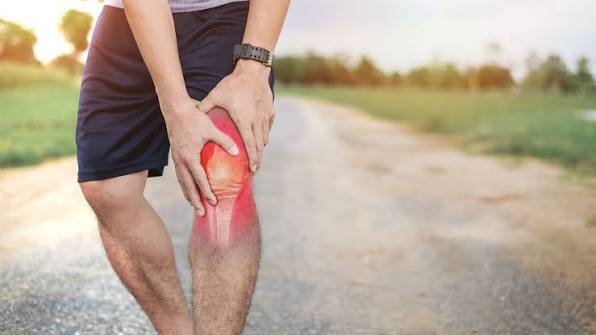
Knee Clicking Sounds and Difficulty Walking: Causes and Treatment in Lucknow
Introduction: That Clicking Sound in Your Knee You stand up from a chair and hear a click from your knee. A few days later, you notice the sound again while climbing stairs. Then walking starts to feel uncomfortable, or the knee feels stiff after sitting for a long time. It is natural to wonder whether the joint is getting damaged. Knee clicking or cracking is common and does not always mean something is wrong. However, when sounds occur alongside pain, swelling, stiffness, locking, or difficulty walking, it is worth getting the knee assessed. The important question is not simply whether the knee makes a sound, but whether that sound comes with other symptoms. Dr. Rishabh Jaiswal, Senior Consultant in Orthopaedic Surgery at Max Hospital, Lucknow, treats a range of bone, joint, sports injury, and joint replacement concerns. Why Do Knees Make Clicking or Cracking Sounds? 1 Painless joint noises Some knee sounds occur during ordinary movement and are not accompanied by pain or swelling. A sound alone is not enough to diagnose arthritis or cartilage damage 2 Changes related to osteoarthritis Osteoarthritis can affect the cartilage and other structures in the joint. Some people experience creaking or grinding sensations along with pain, stiffness, and reduced movement, especially during activity. 3 Meniscus injury The meniscus is a piece of cartilage that helps cushion the knee. A tear may cause pain, swelling, catching, or locking, particularly after a twisting injury. Not every meniscus tear requires surgery; management depends on the tear, symptoms, age, activity, and examination findings 4 Patellofemoral pain Pain around or behind the kneecap may occur during squatting, stair climbing, running, or prolonged sitting. It can sometimes be accompanied by clicking or grinding sensations 5 Ligament or other injury A sudden twist, awkward landing, or sports injury may damage knee structures. A pop at the time of injury, rapid swelling, instability, or difficulty bearing weight warrants prompt assessment. When Is Knee Clicking a Warning Sign? Consider arranging an orthopaedic assessment if clicking repeatedly occurs with pain, swelling, stiffness, reduced range of motion, or difficulty walking. A knee that catches or locks, or feels as though it may give way, also deserves evaluation. Seek urgent medical attention after a significant injury if you cannot bear weight, the knee becomes severely swollen, appears deformed, or you develop a hot, red joint with fever. Do not force a locked or severely painful knee to move. How Is the Cause Diagnosed? A doctor may ask when the sound began, whether there was an injury, which movements trigger it, and whether pain or swelling accompanies it. The physical examination may assess tenderness, range of motion, stability, kneecap movement, and walking. An X-ray may be useful when osteoarthritis, fracture, or another bone-related issue is suspected. MRI may be considered when a meniscus, ligament, or other soft-tissue injury is suspected and the result would affect management. Imaging is selected according to the symptoms and examination; not every clicking knee needs an MRI. Treatment Options: What May Help? Treatment depends on the underlying cause. If the sound is painless and there are no other concerning symptoms, treatment may not be needed. If pain or functional difficulty is present, a clinician may recommend activity modification, physiotherapy, muscle strengthening, gradual return to activity, suitable pain relief, or other measures tailored to the diagnosis. For some people with osteoarthritis, low-impact activity, strength exercises, and weight management where appropriate can help manage symptoms. Meniscus and ligament injuries need individual assessment; some can be managed without surgery, while selected injuries may benefit from a procedure. Surgery should not be decided on the basis of a clicking sound alone. The decision depends on the diagnosis, symptom severity, functional limitations, imaging when appropriate, and a discussion of the potential benefits and risks. What Can You Do at Home? Temporarily reduce activities that clearly aggravate pain, but avoid prolonged inactivity unless advised. Return to exercise gradually and choose movements that do not cause significant pain. Do not repeatedly test the knee by forcing deep squats or twisting movements if they trigger symptoms. Use medication only as advised by a qualified clinician, especially if you have other medical conditions or take other medicines. If symptoms persist, worsen, or interfere with walking, arrange a medical evaluation instead of relying on home remedies alone. Why Seek Orthopaedic Advice in Lucknow? Knee noises can have different explanations, and symptoms provide important clues. An orthopaedic evaluation can help distinguish harmless clicking from problems that need treatment. Dr. Rishabh Jaiswal is a Senior Consultant in Orthopaedic Surgery at Max Hospital, Lucknow, with clinical interests in arthroscopy, sports injuries, and joint replacement. If you have knee clicking along with pain, swelling, locking, or difficulty walking, consult a qualified clinician to discuss the appropriate assessment and treatment options. Frequently Asked Questions Q: Are knee clicking sounds always a sign of arthritis?A: No. Painless clicking can occur without a serious problem. Pain, swelling, stiffness, or functional changes need assessment. Q: Should I get an MRI for knee clicking?A: Not always. A clinician decides whether imaging is needed based on your history and examination. Q: Can a meniscus tear cause knee locking?A: Some meniscus tears can cause catching or locking, but other conditions may also produce similar symptoms. An assessment is needed. Q: Can exercise make knee clicking worse?A: Some movements may aggravate symptoms depending on the cause. Modify painful activities and seek guidance on suitable exercises. Q: When should I see an orthopaedic doctor?A: Seek advice if clicking occurs with pain, swelling, locking, instability, or difficulty walking. Urgent care is appropriate after a significant injury or if you cannot bear weight Conclusion Knee clicking does not automatically mean that the joint is damaged. But when the sound occurs with pain, swelling, stiffness, locking, or difficulty walking, it should not be ignored. Understanding the cause is the first step toward choosing appropriate care Contact Details Dr. Rishabh K Jaiswal | MBBS, MS (Ortho), DNB (Ortho), FJJRSenior Consultant & Unit Head – Orthopedic Surgery & Joint